CASE STUDY · APPSFLYER · ANDROID
AppsFlyer attribution failure after an Android release
An Android update classified paid installs as organic. We found the cause within 30 minutes of the alert and got the operator to stop the rollout before it reached 50%.
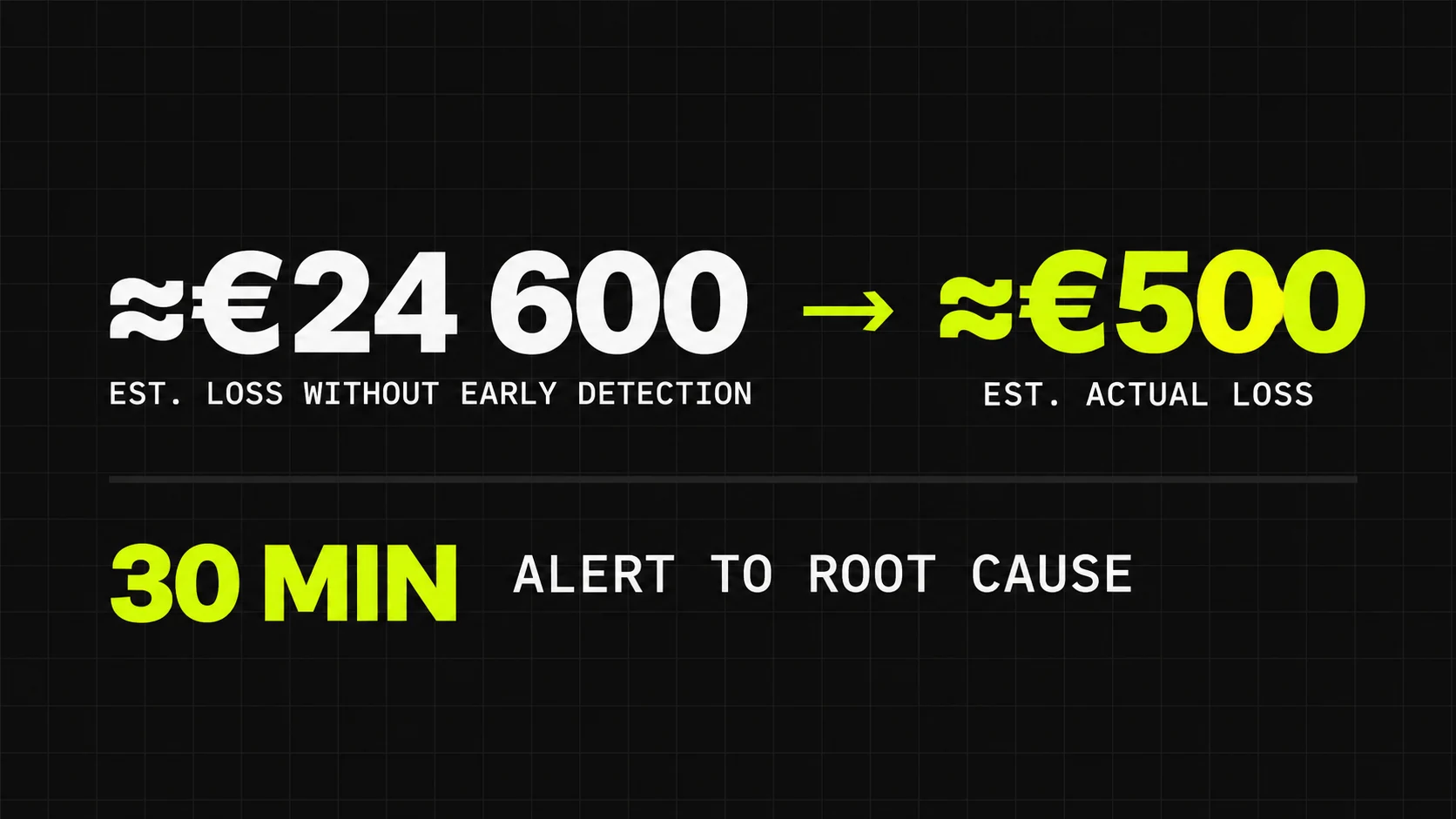
30 min
From alert to root cause
~€500
Estimated actual loss
~€24,600
Estimated loss without early detection
My role
I compared the working and updated Android builds and found that the new build was missing the component that passed install-source data to the app after the AppsFlyer SDK update.
When the operator pointed to stable registrations and deposits, I asked them to check attribution for their own paid Meta and Google campaigns. They confirmed that their paid traffic was also being recorded as organic and cancelled the planned rollout to 50% of users.
What broke
An online casino operator in Germany released Android version 5.8.0. The app still ran, and users could register and deposit. AppsFlyer started recording our paid users as organic, which meant those users generated neither CPA nor revenue share for the affiliate team.
Our traffic went from Meta ads to a pre-landing page and then to Google Play. AppsFlyer normally used the unique click identifier to attribute the install to us. The deal paid €450 per first-time depositor (FTD) plus 50% revenue share. At about €5,000 in daily spend and 15 FTDs, our cost per FTD was roughly €333 and expected revenue was about €600 per FTD. Expected ROI was around +80%.
How we detected it
A script checked the Google Play listing every 30 minutes. We also had a version-level alert for unusually low attributed volume six hours after a release and a separate alert for a drop above 30% in attributed users per 100 clicks compared with the previous week.
At 11:00 on Thursday, version 5.8.0 began rolling out to 20% of users. A move to 50% was scheduled for 10:00 on Friday. At noon, our first test passed because Google Play had served the old version to our test device. Later that day, attributed users per 100 clicks fell by about 20%, below the threshold for the overall alert.
At 17:00 the version-level alert fired. The new version had recorded zero installs attributed to us, against roughly eight expected.
How I found the cause
I first checked whether changes to the consent banner could explain the drop. Registrations and deposits in the operator’s dashboard were holding up, so I focused on how users were attributed. We used a different Google account to obtain the affected version on the test device and reproduced the failure.
I had seen similar incidents while supporting AppsFlyer. I compared the two Android builds and found that the component that passes the acquisition-link data to the app was present in the old build and absent in the new one. After the AppsFlyer SDK update, that component had to be added manually.
How we contained it
At 17:30 we kept campaigns running. Our model showed €1.44 in expected revenue for each €1 spent while the rollout affected 20% of users. We paused automatic budget-cutting rules and exported click records from 11:00 for reconciliation.
At 17:45 we sent the operator a version report, the build comparison and the relevant AppsFlyer documentation. They initially pointed to healthy registrations and app stability. I asked them to check how their own paid Meta and Google campaigns were being attributed on 5.8.0.
By 19:10 they confirmed that their paid Android traffic was also being recorded as organic and cancelled the move to 50%. At 09:30 on Friday, the release manager halted the rollout. The fixed build was sent to us for testing before going live the following week.
Outcome
The operator estimated about three lost FTDs from the rise in organic activity during the roughly 22-hour incident. We secured a one-off €1,200 payment and access to pre-release builds. The team estimated the remaining loss at about €500.
We estimated a potential loss of about €24,600 if the rollout had reached all users and the problem had gone unnoticed until Tuesday. That scenario excludes longer-term revenue share on affected players.
What changed after the incident
We now verify the exact release build before rollout and alert on version-level attribution after two hours. A simultaneous ROI drop across campaigns triggers a manual review before any budget cuts. We also added an analytics upgrade checklist for operators and an escalation guide for the on-call team.